Your facility needs consistent cleaning schedules tailored to unique hazards, daily throughput, food allergens, and inspection schedules, including verifiable documentation validating HACCP requirements, inspection compliance, and health department standards. The information following give details about essential cleaning protocols.
Important Highlights
- Brampton sanitation experts support restaurants, grocery departments, commissaries, warehouses, bakeries, schools, mobile vendors, and allergen-sensitive operations.
- Area-specific procedures clean high-touch surfaces, food-contact equipment, kitchens, floors, drains, restrooms, and storage areas for reducing cross-contamination.
- Qualified contractors check proper chemical concentration, alignment, and contact time, then log finalization with tests, reviews, and corrective-action records.
- Daily, periodic, and cyclical tasks allocated by zone constitute sanitation timelines founded on hazard, output capacity, transitions, incidents, and guidelines.
- Vendors must demonstrate HACCP, public-health expertise, WHMIS instruction, liability, references, coded equipment, and compliance-ready sanitation records.
Which Brampton Operations Need Food Safety Cleaning?
Any Brampton facility that handles, stores, prepares, packages, or serves food needs food safety cleaning. You must implement it if your facility falls under health department oversight, food regulations, or HACCP requirements. That requirement covers eateries, dining facilities, food distribution centers, supermarket departments, meat markets, fish counters, corner stores, and commercial kitchens.
You also need documented food sanitation in distribution centers, food processing plants, freezer facilities, commercial bakeries, educational nutrition programs, event spaces, and catering hubs. Temporary and mobile establishments count too, including catering vehicles, market vendors, and seasonal stalls. If your staff prepare raw materials, portion finished foods, warm up meals, or maintain allergen storage, your facility needs documented cleaning protocols. In Brampton, sanitation isn't elective; it's part of regulatory, business, and safety compliance.
Which Areas Do Brampton Cleaning Experts Cover?
Professional cleaning services specializing in Brampton sanitize touched surfaces, kitchen facilities, ground surfaces, and restrooms to satisfy food safety standards and health requirements. Emphasis on these spaces stems from extreme cross-contamination risk, injury hazards, and compliance issues.
When you know their cleaning scope, you can ensure your operation's cleaning procedures satisfy operational and regulatory requirements.
Focusing on High-Touch Surface Cleaning
Managing high-touch surface disinfection is essential for Brampton maintenance experts because frequently touched zones can transmit microbes and organic matter within a facility. You need a written protocol for cleaning frequently touched items like handles, plates, switches, railings, equipment controls, payment terminals, and fridge pulls. Applying surface identification mapping, specialists determine every frequently handled zone and assign cleaning schedule
swabbing methods to check sanitization success
Kitchens, Floors, and Restrooms
Brampton cleaning services zero in on kitchens, floors, and restrooms as each zone presents distinct food safety, slip-and-fall, and wellness risks. In industrial kitchens, you need degreasing on cook lines, equipment exteriors, drains, prep surfaces, and splash zones to reduce bacterial growth and pest activity.
Floor care that is documented should equally be anticipated. Technicians scrub and extract buildup from grout, tile, and vinyl flooring, then apply correct drying techniques so you can limit falls and maintain code-compliant conditions. They also address entryways where moisture and debris migrate indoors.
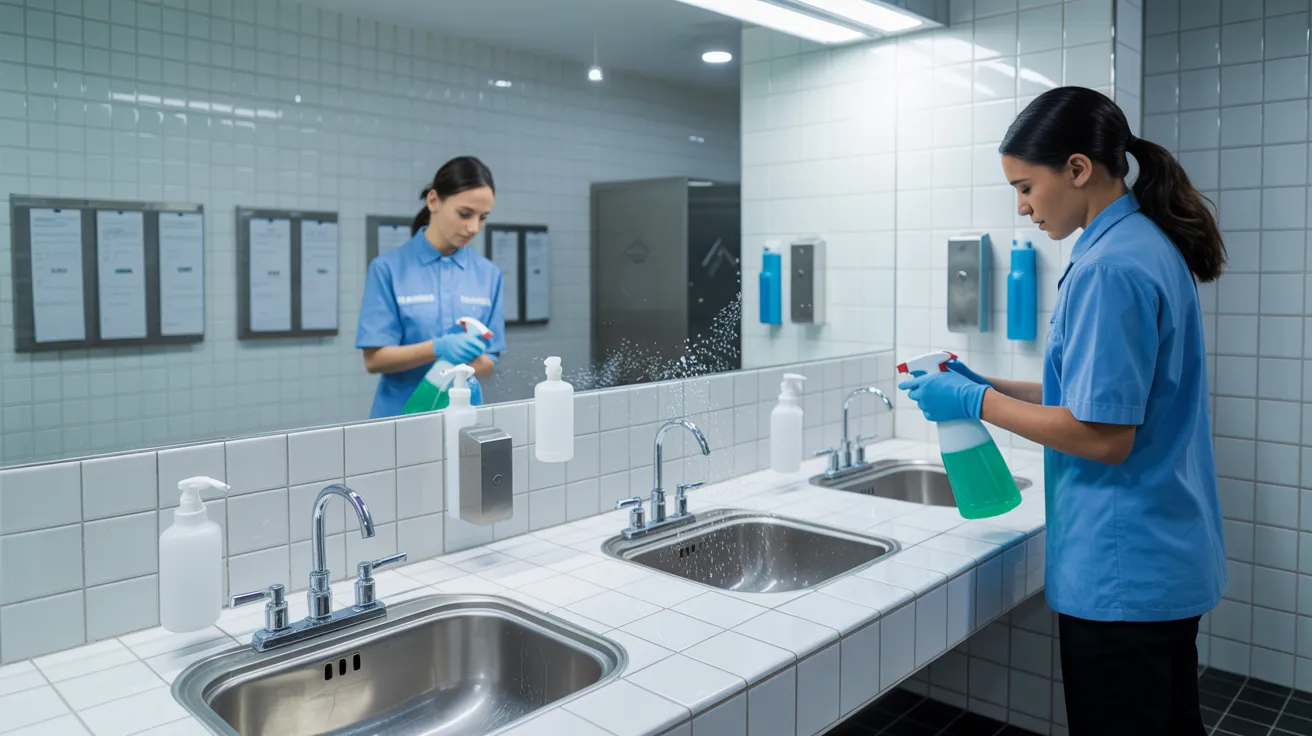
Restroom sanitation involves sanitizing surfaces, fittings, separators, dispensers, and containers, restocking supplies and controlling odours. They also service restaurant moprooms, where chemical storage, sink hygiene, and drainage conditions can affect sanitation compliance and staff safety daily.
How Food Safety Cleaning Benefits Brampton Operations
To comply with health code requirements and pass inspections, Brampton establishments must maintain appropriate cleaning protocols. You also reduce bacterial spread through proper cleaning of food-preparation surfaces, appliances, and frequently-touched items. Most importantly, you safeguard community wellness by reducing the chance of food poisoning in your establishment.
Sanitary Standards Adherence
Because Brampton food companies operate under stringent health requirements, food safety cleaning directly affects your competence to adhere to health code requirements, protect customers, and avoid enforcement action. You must maintain hygienic food handling zones, written maintenance records, proper chemical use, and traceable training practices that correspond to municipal and provincial inspection expectations.
Failure to maintain cleaning standards leads to notices, corrective directives, public perception damage, and potential disruption during further inspections or enforcement actions.
Cross-Contamination Avoidance
Following health code standards depends on your ability to prevent cross-contamination in daily food handling and cleaning. You should isolate raw items from prepared foods, disinfect work areas after use, and maintain separation of cleaning products from food. Clear procedures reduce transfer risks and support consistent compliance during inspections.
Building allergen segregation prevents key allergens from reaching common workstations, storage, or apparatus. Utilize dedicated cutting boards, color-coded tools, and precise instrument labeling so staff don't mix items in cooking or serving.Enforce handwashing after handling raw meat, seafood, eggs, or allergen-containing products. Swap wiping cloths regularly, and confirm disinfectant efficacy using test strips. When your team follows these practices every shift, you foster a cleaner, more secure operation that meets Brampton's food safety expectations consistently.
Community Health Assurance
Should food safety cleaning break, you don't simply risk a failed inspection—you expand the odds of contamination-related sickness harming customers, staff, and the wider Brampton population. You also weaken your role in safeguarding community wellness, especially in high-traffic food premises where contamination can spread quickly through surfaces, equipment, and touchpoints.
You need sanitation procedures that remove soils, sanitize correctly, and verify results. That requires adhering to contact times, using approved disinfectants, recording cleaning times, and training staff to meet health-unit expectations. These measures facilitate disease prevention by reducing pathogens before they reach food or hands. In Brampton, strong sanitation shields at-risk groups, limits outbreak potential, and enables you to show due diligence. When you maintain proper standards, you exceed basic requirements—you substantially decrease danger and promote secure food handling citywide.
How Can Cleaning Practices Ensure Food Safety Compliance?
Establishing thorough cleaning protocols backs food safety compliance by decreasing contamination threats, preventing pathogen multiplication, and maintaining your facility's adherence to sanitation requirements under HACCP-based programs and public health regulations. You validate that food-contact surfaces remain visibly clean and microbiologically controlled, facilitating documented preventive controls and inspection readiness.
Diligent cleaning further strengthens allergen control by removing residues that can lead to undeclared allergen exposure. When you pair established sanitation practices with standards training, your staff can implement uniform procedures, apply approved chemicals correctly, maintain records accurately, and address variations before escalation occurs. Regular cleaning promotes traceability, verifies remediation efforts, and exhibits accountability during audits. It also helps you preserve quality assurance, copyright operational compliance, and decrease the chances of punitive measures, mass recalls, complaints, and avoidable public health risks.
How Should You Plan Commercial Cleaning Services?
maintenance activities.
Seasonal thorough cleaning works best during shutdowns, weather-related soil buildup, or pest-pressure periods
Finding Quality Brampton Cleaning Experts: A Guide
Evaluate providers first by food-safe sanitation requirements rather than cost. You must ensure each provider understands CFIA, public health, and HACCP requirements for your business. Request insurance proof, WHMIS compliance, staff training documentation, and supervision methods. Check technician awareness of contamination prevention, chemical handling, and documented sanitation practices.
You should further examine operational reliability and answerability. Request references from food facilities in Brampton, then review reply speed, corrective-action procedures, and communication protocols. Validate the company supports supplier audits and can supply compliance documentation to authorities or external parties. Confirm equipment receives maintenance, color-coded implements are applied correctly, and facility-specific risks are identified. A qualified provider protects compliance, product integrity, and your reputation in the market.
What's covered in a sanitation cleaning strategy?
Develop a written strategy that clarifies every sanitation responsibility, standard, and task prior to production start. You should outline cleaning schedules, authorized chemicals, concentration levels, contact duration, implements, and validation techniques for each zone, surface, and piece of equipment. Incorporate pre-operational inspections, corrective actions, and employee training requirements.
Your program should also cover cross-contamination controls, waste handling, pest-prevention measures, and documented schedules for bathrooms, drainage systems, surfaces, and food-preparation zones. Explain how you'll separate raw and ready-to-eat processes, support ingredient tracking, and ensure accurate allergen labeling through validated cleaning between product changes. You should designate accountability, keep signed records, and compare results against regulatory standards, HACCP controls, and customer requirements. When gaps appear, update procedures immediately and re-educate staff.
Frequently Asked Questions
Will sanitation providers handle overnight shifts at Brampton properties?
If you operate controlled facilities, you'll also explore this topic require records that support inspections and ensure quality assurance.
Are emergency spill response services provided from sanitation professionals?
Yes, you can locate several Brampton cleaning professionals offering spill containment options. They handle contamination, evaluate risks, contain affected areas, and perform swift decontamination to reduce exposure and prevent disruption. You should confirm timeframes, training credentials, safety measures, and disposal methods. If your facility must meet standards, pick a provider that logs events, maintains standards, and ensures verification.
Will environmentally safe disinfectants protect safely food-handling equipment?
In essence, green disinfectants remain safe for food preparation areas provided you select products labeled food safe that adhere to regulatory requirements. Confirm application timing, dilution rates, and rinse requirements prior to application. Natural-based solutions minimize chemical hazards, although you need demonstration of efficacy against relevant pathogens. To ensure residue free surfaces, adhere to manufacturer directions precisely and ensure the sanitizer complies with applicable food industry sanitation standards.
Can cleaning schedules be modified for seasonal production changes?
Yes, you can adjust cleaning plans for seasonal production changes. You should adjust schedules, labor allocation, sanitizers, and confirmation procedures to align with seasonal patterns while sustaining regulatory requirements. You'll minimize production downtime by planning cleaning around equipment transitions, peak volumes, and usage cycles. You should additionally revise procedural documents, staff education, and environmental monitoring to address seasonal hazards, novel allergens, or increased soil loads. Regular reviews keep your schedule efficient.
Do professional cleaners coach your team in proper hygiene techniques?
Yes, professional cleaning services typically educate your staff on sanitation best practices. You receive employee instruction on proper chemical use, contact times, contamination control, machine breakdown, and documentation. They typically align training with HACCP, GMP, and CFIA or regional health department requirements. Many perform hygiene inspections to verify compliance, identify gaps, and reinforce corrective actions. This allows you to sustain uniform processes, succeed in audits, and reduce food safety risks regularly.
Summary
When you partner with Brampton food safety and commercial cleaning specialists, you aren't merely cleaning—you keep your operation inspection-ready and your protocols compliant. From processing areas to kitchen spaces, every polished surface and maintained area minimizes pest intrusion and prevent costly setbacks. By arranging cleanings at the right intervals and adhering to a detailed cleaning schedule, you protect staff, patrons, and your brand image. In a strict regulatory setting, clean spaces are essential—they're part of doing business right.